Methods Used in Counseling Therapy

Counseling therapy uses multiple evidence-based psychological approaches to support emotional healing, behavioral change, and mental well-being. Each therapeutic method is designed to address different emotional patterns and personal challenges.

  • Cognitive Behavioral Therapy (CBT)

    • Cognitive Behavioral Therapy (CBT) Cognitive Behavioral Therapy (CBT) is one of the most widely used and research-supported counseling methods. CBT focuses on identifying and changing negative thought patterns and behaviors.

How CBT Works

CBT helps clients understand how their thoughts influence emotions and behaviors. By recognizing and changing unhelpful thinking patterns, individuals can develop healthier emotional responses, improve decision-making, and function more effectively in everyday life.
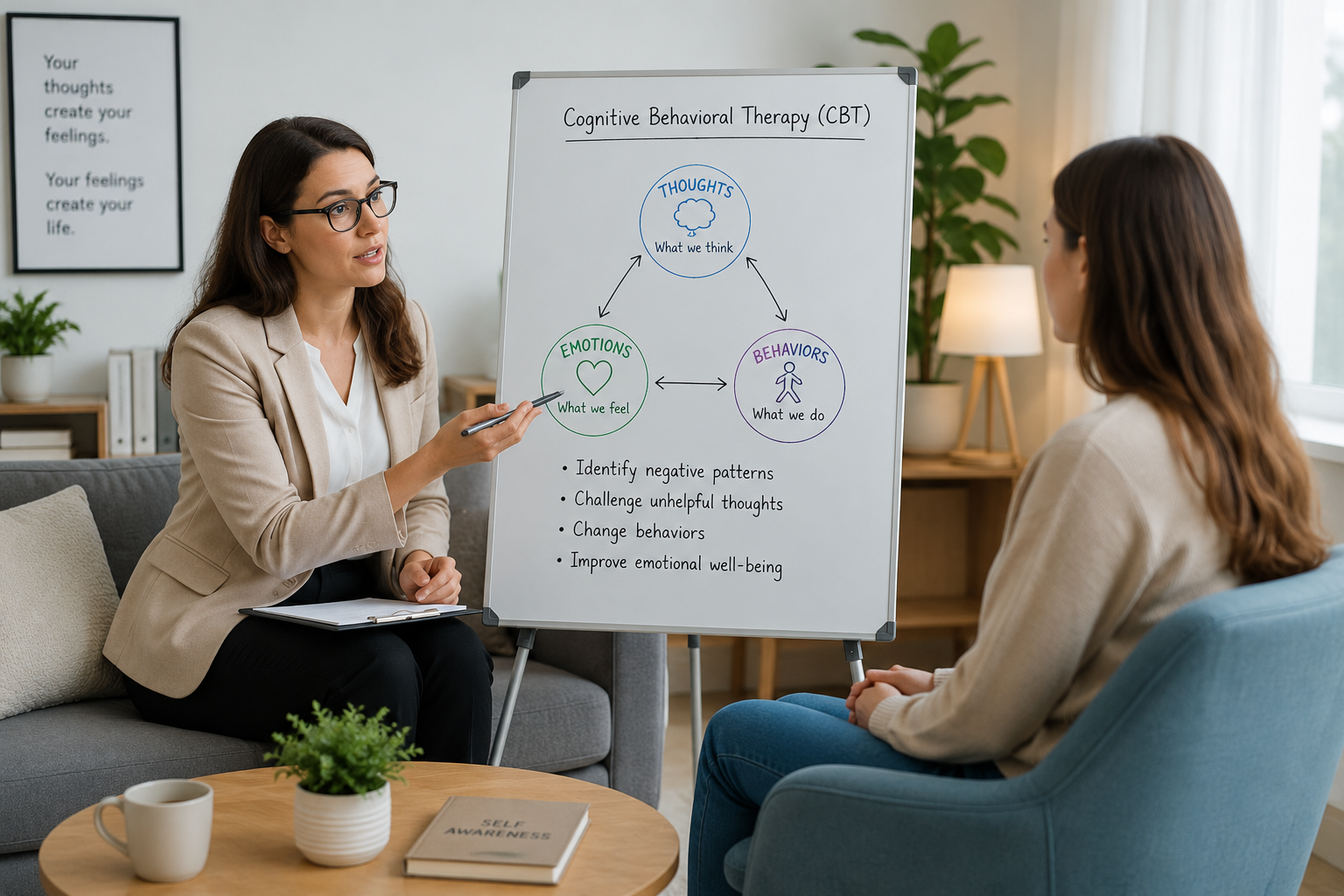
Cognitive Behavioral Therapy
CBT is Commonly Used For
  • Anxiety disorders
  • Depression
  • Panic attacks
  • Stress management
  • Obsessive-compulsive behaviors (OCD)
  • Phobias
  • Sleep difficulties and insomnia
Benefits of CBT
  • Practical coping strategies
  • Improved emotional regulation
  • Better problem-solving skills
  • Reduced negative thinking
  • Increased self-awareness

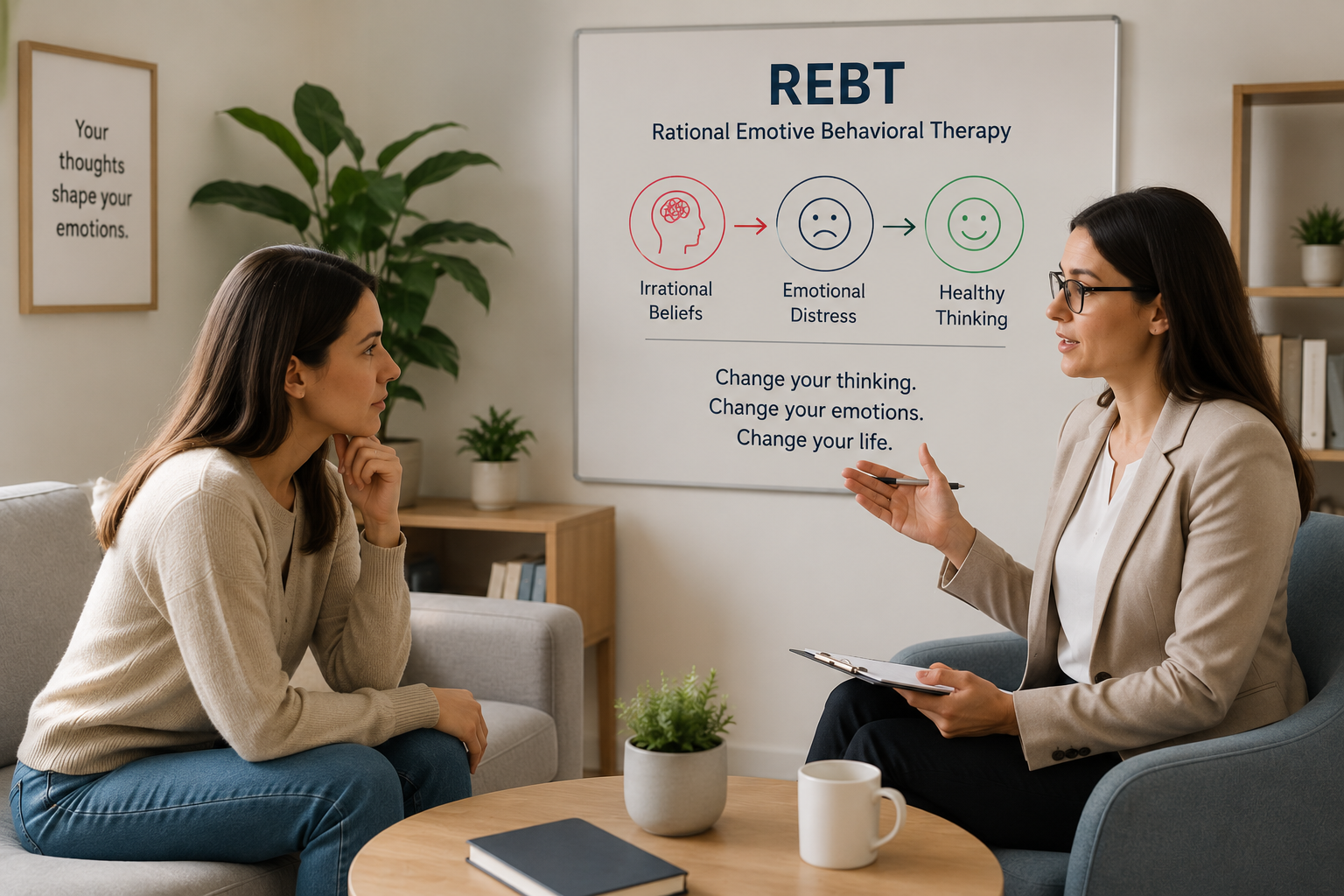
Rational Emotive Behavioral Therapy (REBT)

Rational Emotive Behavioral Therapy (REBT) focuses on identifying irrational beliefs and replacing them with healthier, realistic thinking patterns.

Rational Emotive Behavioral Therapy
Key Principles of REBT
  • Emotions are influenced by beliefs
  • Irrational thinking contributes to emotional distress
  • Challenging unhealthy beliefs improves emotional well-being
REBT Helps With
  • Anxiety
  • Anger issues
  • Low frustration tolerance
  • Self-criticism
  • Relationship stress
Benefits of REBT
  • Greater emotional resilience
  • Improved self-acceptance
  • Healthier thinking patterns
  • Better stress management

Gestalt Therapy

Gestalt therapy focuses on self-awareness, personal responsibility, and living in the present moment. This therapy encourages clients to become aware of emotions, thoughts, and behaviors in the “here and now.”

Gestalt Therapy
Techniques Used in Gestalt Therapy
  • Role-playing exercises
  • Empty chair technique
  • Guided self-awareness activities
  • Emotional expression work
Gestalt Therapy Can Help With
  • Relationship issues
  • Emotional blockages
  • Anxiety and stress
  • Self-awareness challenges
  • Personal growth
Benefits of Gestalt Therapy
  • Increased emotional awareness
  • Improved communication
  • Stronger self-understanding
  • Better emotional expression

Transactional Analysis (TA)

Transactional Analysis (TA) examines communication styles, relationship dynamics, and behavior patterns. It explores how people interact through different "ego states" known as Parent, Adult, and Child.

Transactional Analysis Therapy
Goals of TA Therapy
  • Improve communication
  • Understand behavior patterns
  • Resolve relationship conflicts
  • Develop healthier interactions
TA is Often Used For
  • Relationship counseling
  • Workplace communication
  • Personal development
  • Family conflicts
  • Emotional awareness
Benefits of Transactional Analysis
  • Improved communication skills
  • Healthier relationship patterns
  • Better self-awareness
  • Enhanced emotional intelligence

Person-Centered Therapy

Person-centered therapy focuses on empathy, unconditional positive regard, and active listening. The therapist creates a supportive environment that encourages self-exploration and emotional growth.

Person-Centered Therapy
Person-Centered Therapy Helps With
  • Self-esteem issues
  • Emotional distress
  • Personal growth
  • Relationship concerns
  • Anxiety and depression
Benefits
  • Improved self-confidence
  • Greater emotional acceptance
  • Enhanced self-awareness
  • Stronger decision-making abilities

Psychodynamic Therapy

Psychodynamic therapy explores unconscious thoughts, early childhood experiences, and emotional conflicts that influence present behavior.

Psychodynamic Therapy
Psychodynamic Therapy Can Help With
  • Relationship patterns
  • Trauma recovery
  • Emotional conflicts
  • Personality issues
  • Depression and anxiety
Benefits
  • Deeper self-understanding
  • Emotional insight
  • Resolution of unresolved conflicts
  • Improved relationship awareness

Mindfulness-Based Counseling

Mindfulness-based counseling combines therapeutic techniques with mindfulness practices to improve emotional regulation and reduce stress.

Mindfulness-Based Counseling
Techniques Include
  • Breathing exercises
  • Guided relaxation
  • Present-moment awareness
Mindfulness Therapy Helps With
  • Anxiety
  • Stress
  • Burnout
  • Emotional overwhelm
  • Sleep difficulties
Benefits
  • Improved focus and calmness
  • Reduced stress levels
  • Better emotional balance
  • Increased self-awareness

WHY CHOOSE COUNSELING

Benefits of Counseling Therapy

Counseling therapy provides emotional, psychological, and behavioral benefits that improve overall well-being and support a healthier, more balanced life.

Emotional Benefits

  • Reduced anxiety and stress
  • Better emotional control
  • Increased self-esteem
  • Improved mood stability
  • Enhanced emotional resilience

Behavioral Benefits

  • Healthier coping mechanisms
  • Better communication skills
  • Improved decision-making
  • Positive habit formation
  • Stronger conflict-resolution abilities

Relationship Benefits

  • Improved family relationships
  • Better communication with partners
  • Healthier social interactions
  • Increased empathy and understanding

Personal Growth

  • Greater self-awareness
  • Clearer life goals
  • Improved confidence
  • Enhanced emotional intelligence
  • Better work-life balance

OUR CLIENTS

Valuable Clients Comments

;